How Cylinder Count Affects Compact Skid Steer Engine Performance
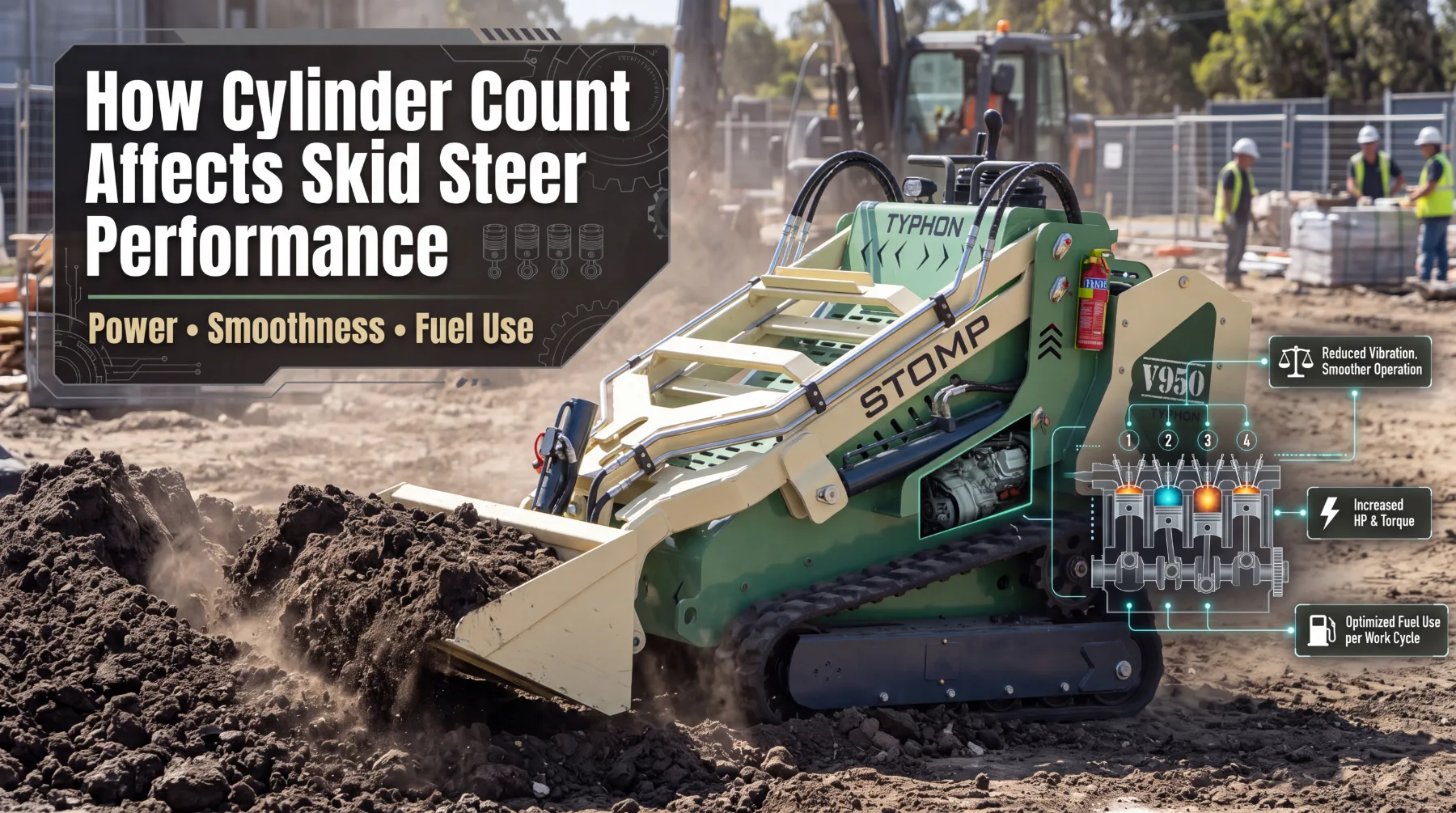
Horsepower gets all the attention on a skid steer spec sheet, but it rarely tells the whole story. Two machines with similar power ratings can feel completely different on the job, and one reason lies under the hood: the number of cylinders in the engine. Cylinder count shapes how power reaches the ground, how smoothly the machine runs through a long shift, and how it handles the demanding push-and-dig cycles that define real work. Understanding this factor helps you look past a single number and choose an engine built for the way you actually operate. This guide breaks down how cylinder count affects compact skid steer performance, from power delivery to fuel use, so you can match the right machine to your workload with confidence.
Engine Cylinder Count and Power Delivery
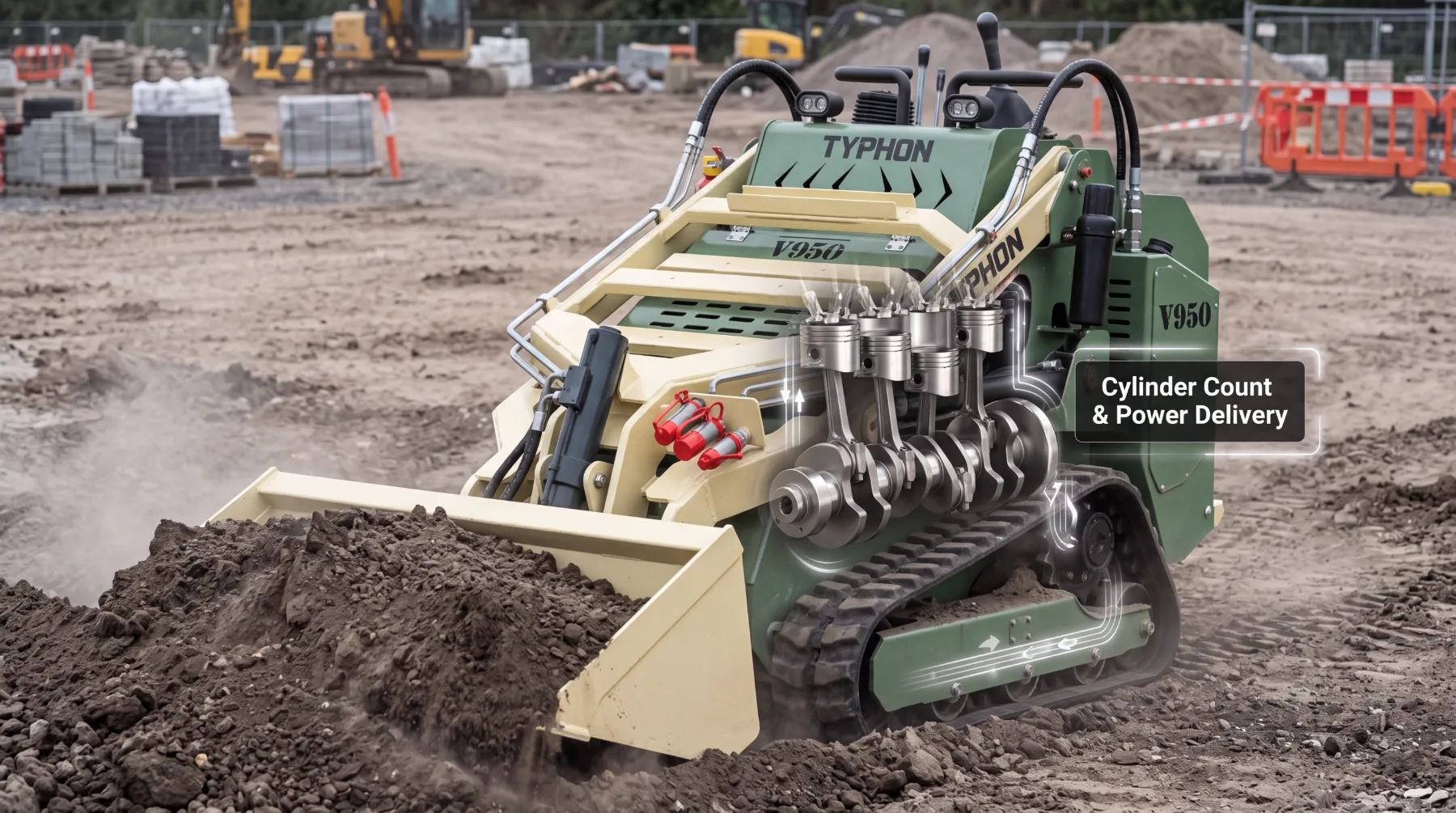
The number of cylinders in an engine directly shapes how that engine produces and delivers its power. Each cylinder fires in sequence, contributing a power stroke that drives the crankshaft. When an engine has more cylinders, those power strokes come more frequently and overlap more smoothly, which creates a steadier flow of power to the machine. Fewer cylinders mean fewer, larger power strokes, which can feel more pronounced but also allow for a simpler, more compact engine design.
For compact skid steers, this trade-off matters a great deal. Space under the hood is limited, and every component has to earn its place. A smaller-cylinder engine keeps the overall package tight, lighter, and often easier to service, which suits the confined engineering of a mini skid steer. Machines like the TYPHON STOMP 507 with its 13.5HP gas engine rely on this kind of straightforward, space-efficient design to stay nimble and dependable.
Higher-output diesel machines take a different path. The TYPHON STOMP V1000, built around a 24HP Kubota D1105, and the STOMP 509 with its 25HP Kubota D1105 use multi-cylinder configurations that deliver power more evenly across the rev range. That smoother delivery helps the machine respond predictably when you feather the controls or transition between tasks.
The key point is that cylinder count is a design decision, not a simple measure of good or bad. It reflects how the engineers balanced power, size, and purpose. When you understand how cylinders influence power delivery, you can better judge whether an engine suits precise, controlled work or lighter, more compact duties.
Torque for Heavy Skid Steer Work
Torque is the force that gets real work done. When you push a full bucket into a pile, drive an auger through hard soil, or dig into packed ground, you are drawing on the engine's torque rather than its peak horsepower. Cylinder configuration influences how an engine produces that torque and where it becomes available in the rev range, which affects how the machine feels under heavy load.
Multi-cylinder diesel engines often build torque in a way that suits sustained, demanding tasks. The Kubota D1105 found in models like the TYPHON STOMP V900 compact track loader and the STOMP X1300 delivers steady pulling power that holds up when the work gets tough. That consistent torque lets the machine keep working through resistance instead of bogging down, which is exactly what you want during grading, backfilling, or continuous attachment use.
Cylinder count is only part of the torque equation, though. Several factors work together to determine how much force an engine can produce:
- Displacement, or the total volume the cylinders can move, which strongly influences torque output
- Engine design, including combustion efficiency and how the engine is tuned
- Rated power, which sets the overall performance ceiling the engine can reach
- Cylinder configuration, which shapes how smoothly that torque is delivered
Because of this, a well-designed engine with fewer cylinders can still produce strong torque for its size, while displacement and tuning often matter more than cylinder count alone. The practical takeaway is to look at the whole picture. When you match an engine's torque characteristics to the heavy work you plan to do, the machine pushes, digs, and lifts with the confidence a demanding jobsite requires.
Engine Smoothness and Vibration
Smoothness may seem like a comfort feature, but it has real effects on productivity and machine longevity. An engine that runs smoothly transfers less vibration to the operator, the controls, and the machine's components, which pays off during the long hours a skid steer spends in continuous work. Cylinder count is one of the biggest contributors to how smooth an engine feels.
The reason comes down to power strokes. With more cylinders, the engine fires more frequently and the power pulses overlap, producing a steadier rotation of the crankshaft. This reduces the roughness that comes from larger, less frequent combustion events. A multi-cylinder engine, such as the Kubota D1105 used across the TYPHON STOMP diesel lineup, tends to run with a consistent, even character that helps the machine hold steady performance through demanding cycles.
Fewer-cylinder engines naturally produce more pronounced power pulses, which can translate into more noticeable vibration. Good engineering, including balanced components and quality mounts, does a lot to manage this, and smaller gas machines like the TYPHON STOMP 507 remain reliable performers for their intended lighter tasks. The point is not that one approach is flawed, but that cylinder count shapes the operating experience in ways worth understanding.
Reduced vibration brings benefits that go beyond comfort:
- Less operator fatigue over a long shift, which supports steadier, safer work
- Reduced wear on hoses, fittings, and mounted components over time
- More consistent performance when running precision attachments
- A quieter, more controlled feel that helps with fine grading and detail work
When an engine runs smoothly, the whole machine feels more composed. That composure helps operators stay productive and helps the equipment last, which is why smoothness deserves a place in your evaluation.
Fuel Use and Engine Efficiency
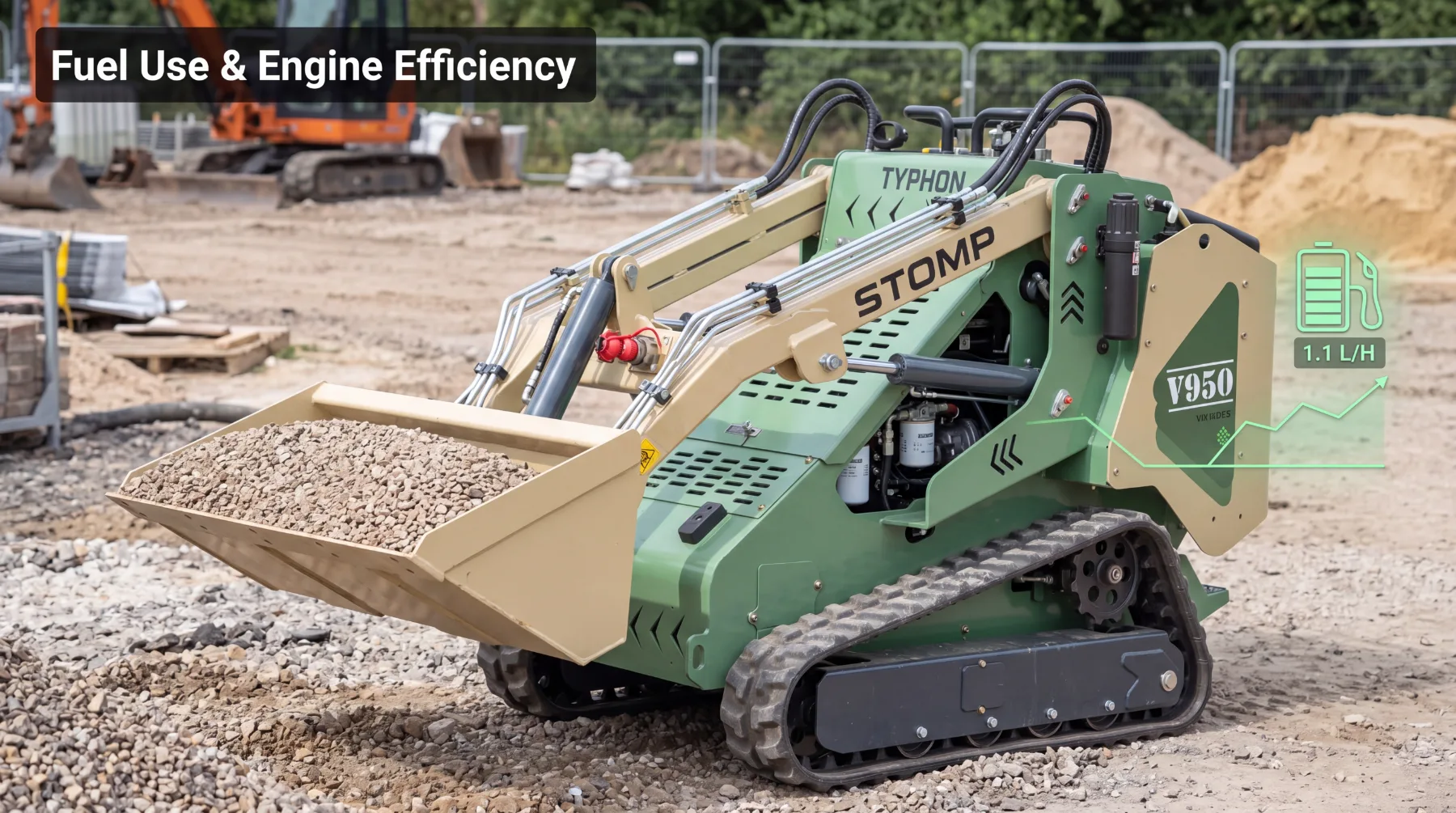
Fuel efficiency is a major cost factor over the life of a skid steer, and it is easy to assume that fewer cylinders automatically mean less fuel burned. The reality is more nuanced. Cylinder count alone does not determine how much fuel an engine consumes. Efficiency emerges from how the entire engine is designed and how it is used on the job.
Several factors carry more weight than cylinder count when it comes to fuel consumption. Engine displacement plays a large role, since a larger engine generally moves more air and fuel per cycle. The injection system matters too, because modern, precise fuel delivery burns fuel more completely and cleanly. Operating speed and load have a direct effect, as an engine working hard under heavy demand naturally uses more fuel than one running light tasks. Overall engine design ties all of this together, determining how efficiently the machine converts fuel into useful work.
This is why comparing machines on cylinder count alone can mislead you. A well-designed diesel like the Kubota D1105 in the TYPHON STOMP V1000 or STOMP 509 is engineered to deliver strong output while managing fuel use efficiently under sustained load. Meanwhile, a lighter gas engine such as the one in the 2,000lbs TYPHON STOMP with its 23.5HP gas powerplant suits smaller tasks where its size matches the workload sensibly.
The smart approach is to think about efficiency in the context of your actual work. An engine sized and designed for your typical loads will use fuel more sensibly than one that is either straining beyond its limits or oversized for light duty. When you match the engine to the job, you get the most productive use out of every gallon.
Matching Cylinder Configuration to the Machine
Choosing the right engine comes down to balance rather than chasing any single spec. A compact skid steer has to reconcile several competing demands at once, and cylinder configuration is one piece that fits within that larger puzzle. The engine must provide enough power and torque for the work while staying within the size, weight, and cooling limits that a compact machine allows.
Space and cooling are real constraints on these machines. A larger multi-cylinder engine offers smooth power and strong torque, but it also takes up more room and generates more heat that the cooling system must manage. A smaller engine keeps the package tight and simple, which suits lighter machines and confined work. Neither choice is inherently better, since each serves a different purpose. The right fit depends on what you ask the machine to do day after day.
When you evaluate a skid steer engine, weigh cylinder count alongside these key factors:
- Horsepower, which sets the overall performance ceiling for the machine
- Torque, which determines pushing, digging, and attachment capability under load
- Displacement, which strongly influences both power and torque output
- Intended workload, including how heavy, frequent, and continuous your tasks are
The TYPHON STOMP lineup at American Excavator illustrates how this balance plays out. For heavy, continuous work, diesel models built on the 25HP Kubota D1105, such as the STOMP 509, STOMP X1300, and V900, deliver the sustained power and smooth torque that demanding jobs require. For lighter, more compact tasks around gardens, farms, and small sites, gas-powered units like the STOMP 507 provide a practical, efficient match. When you align the engine configuration with your real workload, the machine performs the way you expect and rewards you with reliable service.
Conclusion
Cylinder count is a quiet but meaningful factor in how a compact skid steer performs. It shapes how smoothly power reaches the ground, how the engine builds torque for heavy tasks, how much vibration you feel through a long shift, and how the machine fits within the size and cooling limits of a compact frame. Yet it never works alone. Displacement, engine design, the injection system, rated power, and your actual workload all combine to determine how a machine truly performs on the job.
That is why the smartest decision starts with an honest look at your work rather than a single line on a spec sheet. Consider how heavy your loads are, how continuously you operate, and what attachments you plan to run, then choose an engine configuration built to handle those demands. The TYPHON STOMP range at American Excavator offers both smooth multi-cylinder diesel machines for demanding daily use and efficient gas-powered units for lighter tasks. When you match the engine to your workload, you invest in a machine that delivers dependable power, comfortable operation, and lasting value on every job.
Frequently Asked Questions
1. Does a skid steer with more cylinders always perform better?
Not necessarily. More cylinders often provide smoother power delivery and reduced vibration, which benefits continuous, demanding work. However, performance depends on the complete engine design, including displacement, torque characteristics, rated power, and how well the engine matches your workload. A well-engineered engine with fewer cylinders can be an excellent choice for lighter or more compact tasks, offering a simpler, space-efficient package. The best approach is to match the engine configuration to the type of work you do rather than assuming more cylinders automatically mean better results.
2. Why does cylinder count affect engine smoothness?
Smoothness comes down to power strokes. Each cylinder contributes a combustion event that drives the crankshaft, and with more cylinders those events happen more frequently and overlap more evenly. This produces a steadier rotation and less of the pulsing that causes vibration. Fewer-cylinder engines have larger, less frequent power strokes, which can feel rougher, though good engineering with balanced components and quality mounts manages this well. Smoother operation reduces operator fatigue, lowers wear on machine components, and helps with precise work like fine grading and detailed attachment use.
3. How does cylinder count relate to torque for heavy work?
Cylinder configuration influences how an engine produces torque and where that torque becomes available in the rev range, which affects how the machine handles pushing, digging, and running attachments under load. That said, cylinder count is only one part of the equation. Displacement, engine tuning, and rated power often matter more when it comes to raw torque output. A properly designed engine, such as the Kubota D1105 diesel used in several TYPHON STOMP models, delivers steady torque that holds up under sustained resistance, which is what heavy jobsite work demands.
4. Do fewer cylinders mean better fuel economy?
Not on their own. Cylinder count alone does not determine fuel consumption. Efficiency depends on engine displacement, the injection system, operating speed, load, and overall engine design working together. A modern diesel with precise fuel delivery can run efficiently under heavy load, while a smaller gas engine suits lighter tasks where its size matches the work. The most fuel-efficient choice is an engine sized and designed for your typical workload, since an engine that is straining beyond its limits or oversized for light duty will use fuel less sensibly.
5. How do I choose the right engine for my skid steer needs?
Start by assessing your actual workload, including how heavy your loads are, how continuously you operate, the terrain you work on, and the attachments you plan to run. Then weigh cylinder count alongside horsepower, torque, and displacement rather than focusing on any single number. For heavy, continuous work, a multi-cylinder diesel like the 25HP Kubota D1105 in the TYPHON STOMP 509 or X1300 delivers sustained power and smooth torque. For lighter tasks, a gas-powered unit like the STOMP 507 offers an efficient, compact match. Aligning the engine with your work ensures dependable performance.