How Stone Crushers Improve Material Processing Efficiency
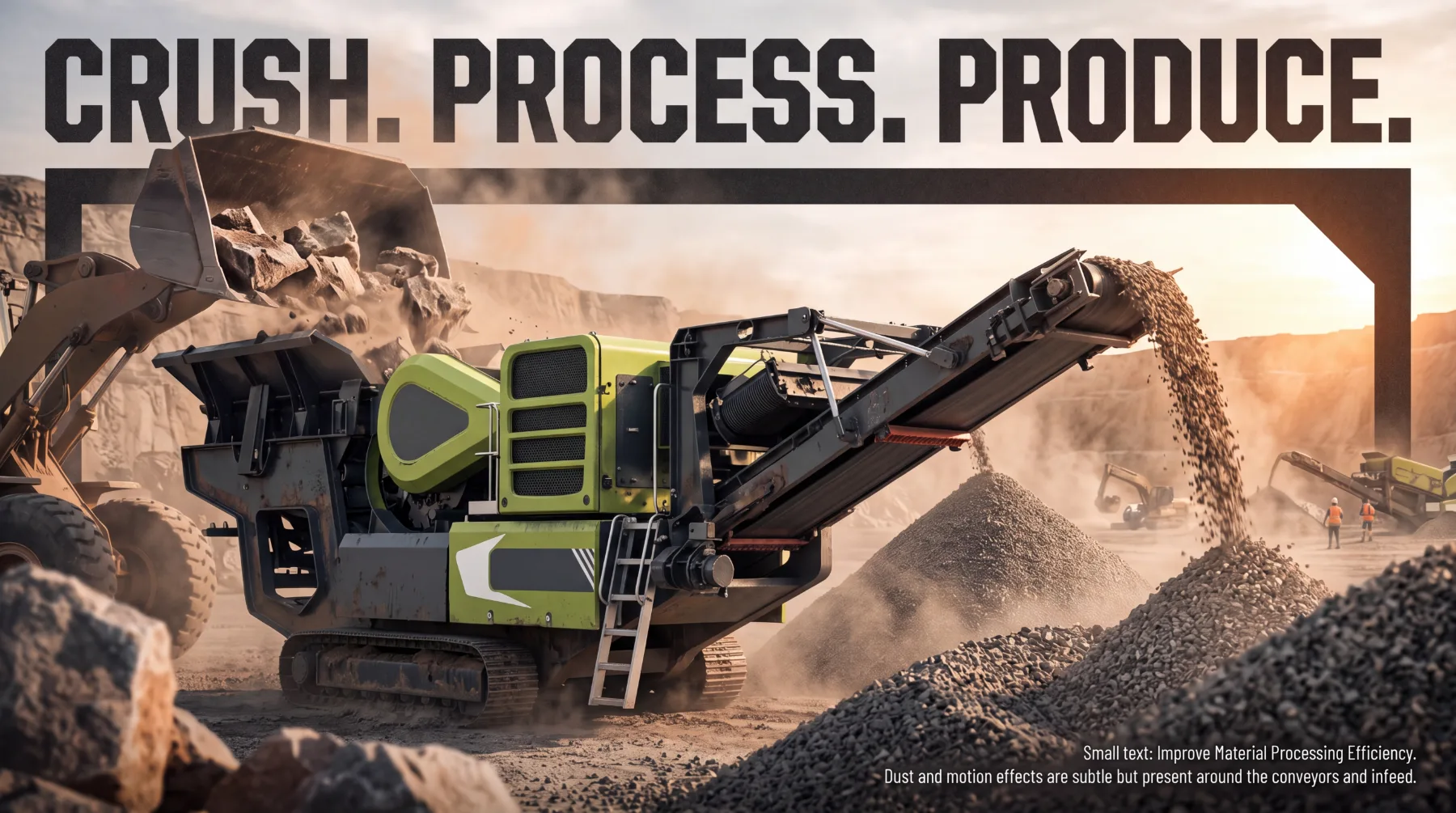
Every construction and aggregate operation runs on a simple truth: material has to be the right size before it can do any work. Raw rock straight from a quarry, a trench, or a demolition site is too large and irregular to build with, and preparing it by slower methods drains time, labor, and money. A stone crusher solves that problem directly, turning oversized rock into sized, usable aggregate efficiently and at scale. This guide explains exactly how stone crushers improve material processing efficiency, from faster reduction and consistent output to smarter handling, better use of recycled material, and smoother overall jobsite operations. By the end, you will understand how the right crusher keeps material flowing and what matters most when choosing one that delivers these efficiency gains dependably.
Faster Material Reduction
The most immediate way a stone crusher improves efficiency is speed. Breaking large rocks into smaller, usable aggregate sizes by hand or with basic tools is painfully slow and demands significant labor, yet a stone crusher performs the same reduction continuously and at a pace no manual method can approach. It feeds oversized rock through its crushing chamber and produces sized material in a steady flow, dramatically cutting the time and effort needed to prepare material for construction. That speed is the foundation of every other efficiency the machine delivers.
This faster reduction has a direct effect on both time and labor. Where a crew might otherwise spend hours reducing rock and still fall behind demand, a crusher processes large volumes rapidly, freeing your workforce for skilled tasks rather than exhausting physical work. Fewer people can prepare far more material, which lowers the labor cost tied to material preparation and eases the strain on your crew across the working day.
Just as important, efficient crushing helps keep material processing moving at a steady, predictable pace. A construction or aggregate operation depends on a reliable supply of sized material, and any slowdown in reduction creates a bottleneck that ripples through the rest of the work. Consider what steady reduction protects:
- Schedule reliability, since material is ready when downstream work needs it rather than lagging behind.
- Crew productivity, because workers and equipment are not left waiting for prepared aggregate.
- Consistent throughput, keeping the whole processing chain moving at a dependable rhythm.
When a crusher reduces material quickly and continuously, it removes the single largest slowdown in aggregate preparation. That is why faster reduction is the clearest and most valuable efficiency a stone crusher brings to any operation working with raw rock.
Consistent Aggregate Output
Speed matters little if the material it produces cannot be used, which is why consistent output is such an important part of a crusher's value. A properly selected crusher produces more uniform material sizes suited to specific applications, delivering aggregate that meets the requirements of the job rather than a rough, inconsistent mix. This uniformity turns crushed rock into a dependable, specification-ready product, and that reliability is central to efficient processing.
Different projects demand different sizes, and consistency makes it far easier to prepare aggregate for each. Construction work rarely tolerates a variable product, because the quality of the finished result depends on the material meeting exact requirements. Consider how uniform output supports common applications:
- Road bases, which rely on properly graded aggregate to form a stable, load-bearing foundation.
- Concrete, which requires specific stone sizes to produce strong, consistent mixes.
- Drainage systems, which need clean, uniform gravel to function and last.
When a crusher delivers consistent sizing, preparing material for these uses becomes straightforward rather than a matter of sorting, re-processing, or working around an unreliable product.
Consistency also drives efficiency by reducing waste and rework. Inconsistent output means some material falls outside specification and must be re-crushed or discarded, both of which cost time and money. A crusher that reliably produces the sizes you need the first time keeps material moving directly into the project, without the delays that variable output creates. This predictability lets you plan production with confidence, knowing each batch will meet the standard your work requires. For any operation supplying aggregate to demanding applications, that dependable, uniform output is not a minor benefit but a core reason a well-chosen crusher improves overall processing efficiency and protects the quality of everything built with the material it produces.
Higher Material-Handling Efficiency
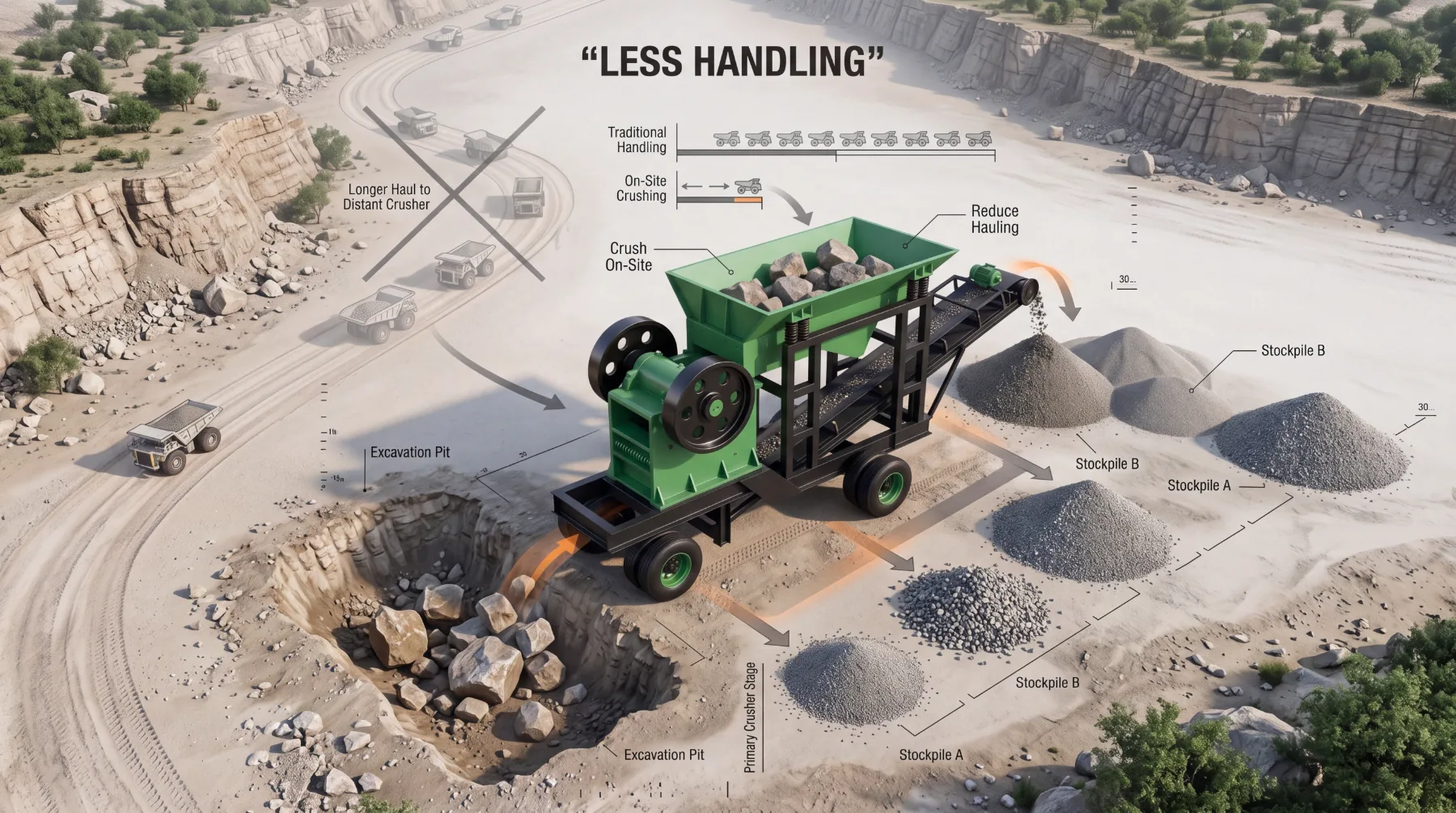
Beyond reduction and output, a stone crusher improves efficiency by changing how material moves around your operation. Crushing rock directly at or near the jobsite reduces the need to handle and transport oversized material repeatedly, and that reduction in handling is a genuine, often underestimated source of savings. Oversized rock is heavy, awkward, and costly to move, so every time it must be loaded, hauled, and unloaded, it consumes time, fuel, and labor. On-site crushing cuts much of that burden away.
The logic is simple. When raw rock is crushed close to where it is excavated or where the finished aggregate will be used, you avoid transporting bulky, unprocessed material over long distances. Instead of hauling heavy oversized rock off-site to be processed and then hauling sized aggregate back, the material is reduced on location and moves only once, already in usable form. This streamlines the overall material-processing workflow considerably.
The practical gains show up across the operation:
- Reduced transport, since oversized rock no longer needs repeated hauling to and from a processing location.
- Less repeated handling, because material is reduced where it sits rather than moved multiple times in its raw state.
- Lower fuel and equipment demand, as fewer trips and less loading mean less wear and expense on hauling equipment.
Together, these effects tighten the workflow from raw rock to finished aggregate. Rather than a process scattered across multiple locations with material shuttled back and forth, on-site crushing brings reduction to the point of need, keeping material movement to a minimum. This is why higher material-handling efficiency is such a practical advantage. By crushing at or near the jobsite, you eliminate wasted movement, control costs, and keep the entire processing operation flowing smoothly rather than bogged down in the repeated handling of heavy, oversized stone.
Better Use of Excavated and Recycled Material
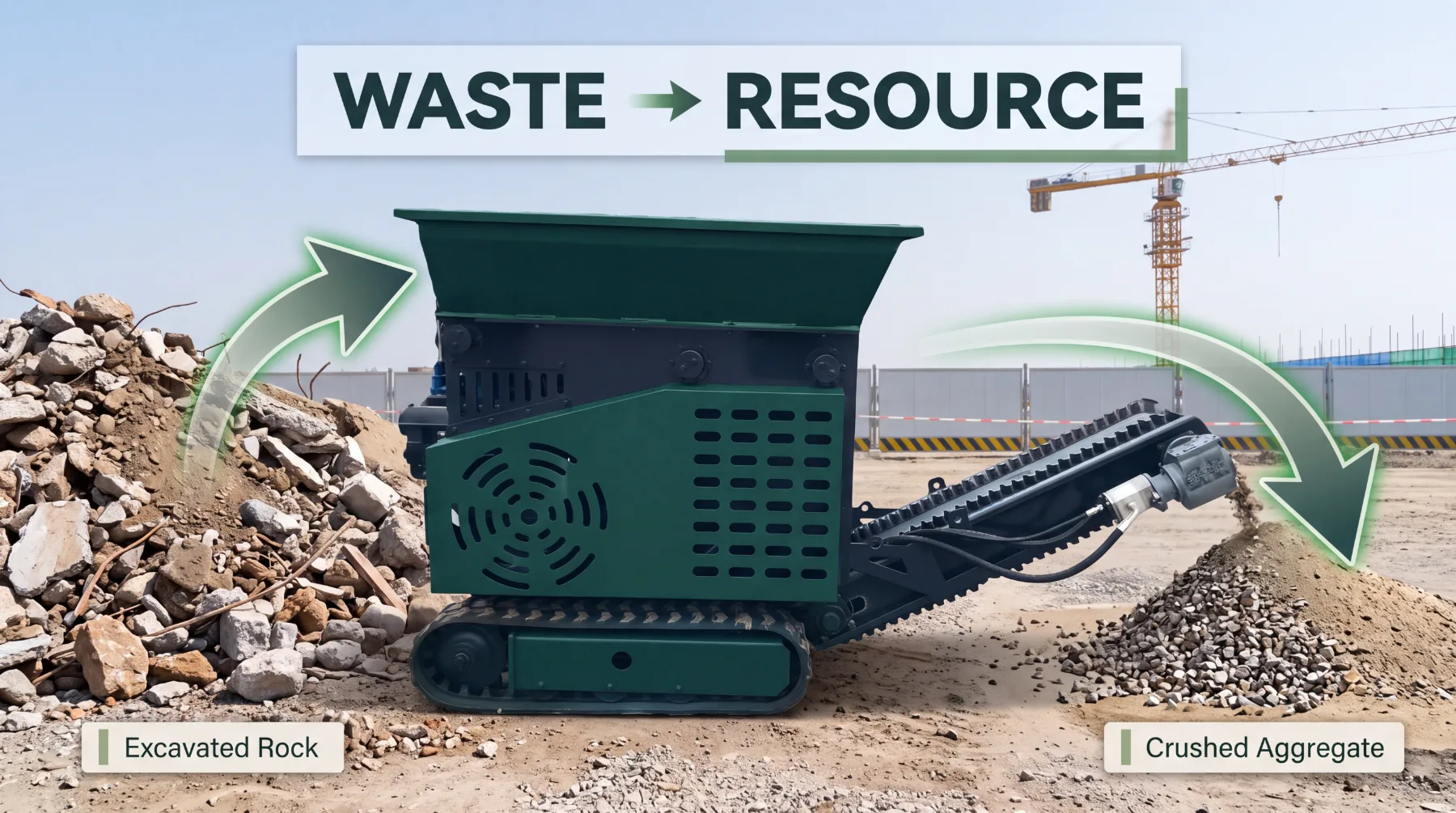
A stone crusher does more than process fresh quarry rock; it turns material that might otherwise be waste into a valuable resource. Crushers can process excavated rock, demolition debris, and other suitable aggregates into reusable material, giving a second life to stone that would otherwise be hauled away and discarded. This capability improves efficiency in a distinctive way, reducing waste while creating usable resources directly for the project at hand.
Consider how much usable material an ordinary operation generates and often throws away. Excavation produces large volumes of rock as a byproduct of digging, and demolition leaves behind concrete and stone debris in quantity. Rather than treating these as disposal problems, a crusher converts them into sized aggregate ready for reuse. The benefits work in two directions at once:
- Reduced waste, since material that would be removed and dumped is instead processed and kept on-site.
- Created resources, because the crushed product becomes usable aggregate for the very project that produced the raw material.
This dual benefit makes recycling and reprocessing one of the more compelling efficiency gains a crusher offers.
The efficiency here is both practical and economic. When you process excavated rock and demolition debris on-site, you reduce the cost and effort of hauling that material away, and you simultaneously reduce the need to purchase and transport new aggregate. The material you already have becomes the material you need, closing a loop that would otherwise involve disposal at one end and procurement at the other. For projects generating significant excavated or demolition material, this ability to reprocess waste into usable resources represents a meaningful improvement in overall efficiency. It keeps material working within the project, controls costs on both disposal and supply, and reflects a smarter, more resourceful approach to material processing that a capable stone crusher makes possible.
Supporting More Efficient Jobsite Operations
The individual advantages of a stone crusher combine into something greater: a smoother, more efficient jobsite operation overall. By bringing together controlled crushing, material reduction, and easier aggregate preparation, a crusher improves the flow of material-processing operations from start to finish. Rather than a series of disconnected, labor-heavy steps, material moves through a coordinated process, arriving where it is needed in the size and quantity the work requires. This improved flow is the sum of everything the crusher does well.
Controlled crushing is central to this. A crusher does not simply break rock; it reduces it in a managed, predictable way that produces the material the operation needs on demand. That control means aggregate preparation stops being a bottleneck and becomes a reliable, steady stage in the workflow. When material reduction keeps pace with the rest of the site, crews and equipment downstream are supplied consistently, and the whole operation moves at a more productive rhythm without the delays that inconsistent processing would cause.
Achieving these gains, however, depends on choosing the right machine for the work. The right machine size and crushing capacity are important for realizing the efficiency a crusher promises. Consider why this matters:
- Capacity matched to demand ensures the crusher processes material at the volume your operation actually needs, avoiding bottlenecks from a machine too small or unnecessary cost from one too large.
- Size suited to the site ensures the machine fits your conditions and integrates smoothly into your workflow rather than proving impractical to deploy.
When the machine is properly matched to the operation, controlled crushing, steady reduction, and dependable aggregate preparation come together to keep material flowing efficiently. That is how a stone crusher supports more efficient jobsite operations: not through any single feature, but by making the entire material-processing chain work as a coordinated, productive whole.
Conclusion
A stone crusher improves material processing efficiency in several connected ways that together transform how an operation handles rock. It reduces large material into usable aggregate far faster than manual methods, cutting time and labor while keeping processing moving at a steady pace. It produces consistent, uniform output ready for road bases, concrete, drainage, and other demanding applications, reducing waste and rework. Crushing at or near the jobsite lowers the repeated handling and transport of oversized rock, streamlining the workflow, while the ability to process excavated rock and demolition debris turns waste into reusable resources. Brought together, these capabilities improve the flow of the entire operation, provided the machine's size and crushing capacity are properly matched to your needs. To capture these gains, define your material, your required output, and your production volume, then choose a crusher sized to meet them. Match the machine to the work, and it will deliver the reliable, efficient processing your operation depends on.
Frequently Asked Questions
1. How do stone crushers speed up material reduction?
Stone crushers break large rocks into smaller, usable aggregate sizes continuously and at a pace that manual methods cannot match. Reducing rock by hand or with basic tools is slow and labor-intensive, but a crusher feeds oversized material through its crushing chamber and produces sized aggregate in a steady flow, dramatically cutting the time and effort needed to prepare material for construction. This speed reduces both time and labor, since fewer people can prepare far more material, freeing your crew for skilled tasks rather than exhausting physical work and lowering the labor cost tied to preparation. Just as importantly, efficient crushing keeps material processing moving at a steady, predictable pace. Any slowdown in reduction creates a bottleneck that ripples through the rest of the operation, leaving crews and equipment waiting. By reducing material quickly and continuously, a crusher removes the largest slowdown in aggregate preparation and keeps the whole processing chain flowing at a dependable rhythm.
2. Why does consistent aggregate output matter so much?
Consistent output matters because speed alone is not useful if the material cannot meet the requirements of the job. A properly selected crusher produces more uniform material sizes suited to specific applications, delivering specification-ready aggregate rather than a rough, variable mix. This uniformity is essential because different projects demand different sizes: road bases rely on properly graded aggregate for a stable foundation, concrete requires specific stone sizes for strong mixes, and drainage systems need clean, uniform gravel to function. When a crusher delivers consistent sizing, preparing material for these uses becomes straightforward rather than a matter of sorting or re-processing. Consistency also drives efficiency by reducing waste and rework, since inconsistent output means some material falls outside specification and must be re-crushed or discarded, both of which cost time and money. A crusher that reliably produces the sizes you need the first time keeps material moving directly into the project and lets you plan production with confidence.
3. How does on-site crushing reduce material-handling costs?
On-site crushing reduces the need to handle and transport oversized material repeatedly, which is a genuine and often underestimated source of savings. Oversized rock is heavy, awkward, and costly to move, so every time it must be loaded, hauled, and unloaded, it consumes time, fuel, and labor. When raw rock is crushed close to where it is excavated or where the finished aggregate will be used, you avoid transporting bulky, unprocessed material over long distances. Instead of hauling heavy oversized rock off-site to be processed and then hauling sized aggregate back, the material is reduced on location and moves only once, already in usable form. This delivers several practical gains: reduced transport since oversized rock no longer needs repeated hauling, less repeated handling because material is reduced where it sits, and lower fuel and equipment demand as fewer trips mean less wear and expense. Together these tighten the workflow from raw rock to finished aggregate.
4. Can a stone crusher process recycled or excavated material?
Yes, and this is one of its most valuable efficiency benefits. Crushers can process excavated rock, demolition debris, and other suitable aggregates into reusable material, giving a second life to stone that would otherwise be hauled away and discarded. Excavation produces large volumes of rock as a byproduct of digging, and demolition leaves behind concrete and stone debris in quantity. Rather than treating these as disposal problems, a crusher converts them into sized aggregate ready for reuse. The benefit works in two directions: it reduces waste by keeping material that would be dumped on-site, and it creates usable resources because the crushed product becomes aggregate for the very project that produced the raw material. This is both practical and economic, since processing excavated rock and demolition debris on-site reduces the cost of hauling material away while also reducing the need to purchase and transport new aggregate. The material you already have becomes the material you need.
5. What should I consider to get the most efficiency from a crusher?
The key is matching the machine to your operation, because the right machine size and crushing capacity are essential to realizing the efficiency a crusher promises. Start with capacity matched to demand, ensuring the crusher processes material at the volume your operation actually needs. A machine too small becomes a bottleneck that slows the whole operation, while one too large carries unnecessary purchase and operating costs. Next, consider size suited to the site, so the machine fits your conditions and integrates smoothly into your workflow rather than proving impractical to deploy. Beyond these, define your material, your required output size, and your production volume before choosing, since these shape which crusher will perform dependably for your work. When the machine is properly matched, controlled crushing, steady material reduction, and dependable aggregate preparation come together to keep material flowing efficiently. That coordination across the whole processing chain, rather than any single feature, is what delivers the greatest efficiency gains.